
The Launchpad · QA Engineer Fellowship
Most first jobs teach you
to follow instructions.
This one teaches you to lead.
DT Fellows work full-time alongside founders and directors of ₹100–500Cr companies. Your first career shapes everything that follows. Most jobs give you tasks. Here, you solve problems, understand business context, and make your own decisions.
“Everyone at some point in life should work at DT.”
Feliza Dadachenji, Maths Asst Professor | DT Fellow, 2020
We don't look for the best candidate. We look for the most curious.
QA Engineer Fellowship · 1 round · 48 hours · No interviews until you've seen how we work.
The big picture
The bridge from strategy to execution.
Every company decides what to do, then does it. The gap between the two is where growth dies. A DT Fellow is the bridge.
GoalThe MD
The number the company must hit.
StrategyThe function head
The plan to hit it, tuned as results come in.
The PlanThe DT Fellow
You build the play that actually works, then step back.
SupervisionTeam leads
Keeps the work on track, week by week.
WorkThe reps
Run the workflow. Send the output.
What V3 does
Find the play. Months of experiments until you find what actually moves the number.
Codify it into PDGMS. The system DT builds. Your play becomes a workflow it can run.
Step back. The platform runs it from then on. The team makes the calls that need a human.
Prove the winning play once. Fewer hires, higher revenue.
The deck
The company, in nine slides.
The same deck we show investors, minus the numbers we keep private. Use the arrows to move through it.

विघ्ननायक · Vignanayaka
The one who removes obstacles to knowledge.
Not obstacles in the world. Obstacles in how you see. Indian philosophy names the capacity to clear the path between you and understanding. That capacity lives in three qualities — the same ones we look for in every DT Fellow.
Made in India for the world.
PDGMS — transforming people, growing businesses.
Three Values
What we look for — in life and at work.
You own the outcome, not just the process.
The Cook
Two cooks make the same dish. Cook A follows the recipe exactly — 2 tsp salt, 350°F, 45 minutes. It comes out edible. Cook B tastes at every step, adjusts the salt because this brand is stronger, checks the oven because hers runs 10 degrees hot, pulls it out early because the edges are browning. Same recipe. Cook B's food is better — not because she's more talented, but because she's paying attention to what's actually happening instead of following instructions.
The Directions
You're driving to a new city. Driver A follows the GPS turn by turn — "turn left in 200 meters." Arrives fine. But when the GPS reroutes around construction, they panic — they don't know which direction they're heading or why. Driver B glanced at the map first: "I'm heading south, the city is by the river, the highway cuts through the center." When the GPS reroutes, they adjust — because they know where they're going, not just what to do next.
The Flat Tire
Two people get a flat tire on a highway. Person A calls roadside assistance and waits 90 minutes. Person B checks the trunk — spare tire, jack, wrench. Watches a 2-minute video. Changes it in 15 minutes. Not because Person B is a mechanic — but because they assumed they could figure it out before assuming they couldn't.
These aren't interview answers. They're ways of being.
Why DT
Two kinds of people walk into
a broken factory. We hire the second.
Type A · Tool-First
Sees a broken process. Proposes a dashboard. Builds a tracker. Runs training sessions. Wonders why nothing changes. Solves the stated problem.
Type B · Diagnosis-First
Sees a broken process. Asks “why is nobody filling the root cause field?” Listens to the supervisor. Discovers the blame culture. Designs a system that makes the right behaviour easy. Solves the actual problem.
What Fellows Do
Decision-making power in their 20s.
Most people reach decision-making roles by their 40s. DT Fellows work alongside CEOs and Directors of ₹100–500Cr companies, driving organisational transformation and AI, from their very first full-time role.
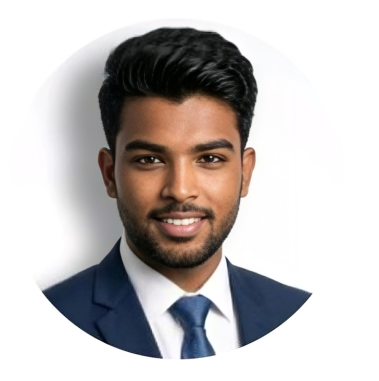
Sravan Kumar
Chief of Staff
Pharma company, ₹200Cr+
Works directly with the MD (NASA scientist founder). Brought in AI that cut purchase-to-dispatch from 3 days to 1. Runs decisions that change how the factory floor operates.
Joined as: BBA fresher
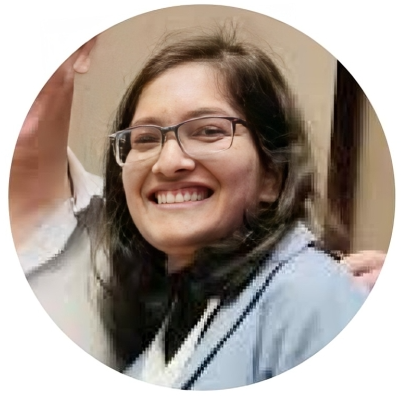
Shagun Mishra
AI Programs Lead
India’s largest probiotic manufacturer
Led a 20-member team. Shipped 58 software modules as a fresher in 2023 — before AI tools existed. Now leads AI Programs at a company present in 60+ countries.
Joined as: BTech fresher

Jayaraj
Engagement Lead
Multiple DT client companies
Works with company Directors on growth strategy and execution. Drives organisational transformation across manufacturing and services companies.
Joined as: BTech fresher
The Architects
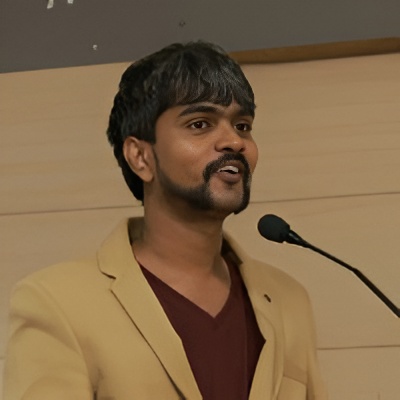
Tarun Ayitam
15 years of designing the scientific method. Alumnus of IISER Pune (Mathematics & Theoretical Computer Science) and TEDx speaker. Tarun encoded 32+ company implementations into PDGMS AI Platform to lower CAC and drive employee ownership.
HERITAGE
Who's been in this room
This programme has been running in different forms since 2011. Fifty participants from six countries have been through it. These are the people whose work and questions shaped what the programme is today.
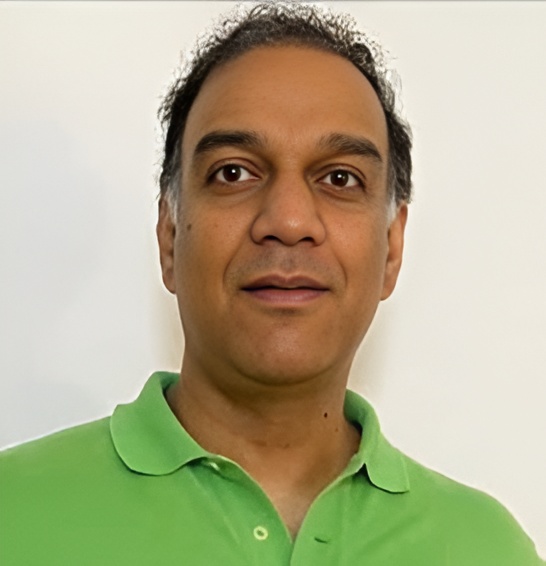
Raghu Seelamsetty
Founder, Escape Velocity
 2017
2017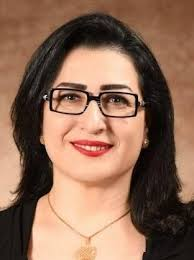
Nastaran Bisheban
CTO, KFC Canada
 2021
2021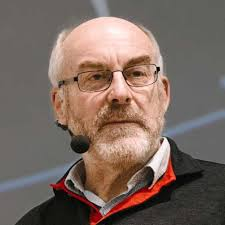
Dave Snowden
Founder & CSO, Cognitive Edge
 2021
2021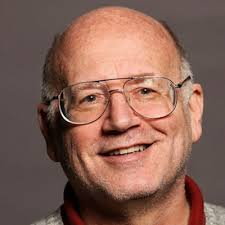
Dr. Michael Lissack
President, American Society for Cybernetics
 2021
2021
Abhinav Gupta
AVP Innovation, Broadridge
2023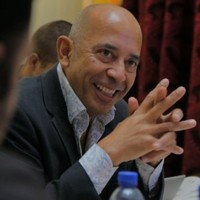
Humberto Schwab
Founder, Socratic Design Academy
 2020
2020
Dr. Matti Itkonen
Cultural Philosopher, University of Jyväskylä
 2021
2021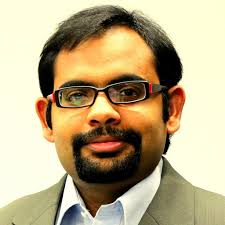
Kashyap Kompella
Hyderabad Chair, StartupGrind
2017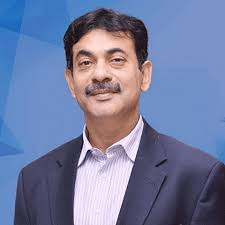
Jayesh Ranjan
IAS Officer, Govt of Telangana
2017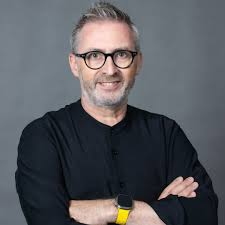
Dr. David Willows
Director of Advancement, University of Brussels
 2021
2021Designations are as on the date when the participant attended the dialogue.
WHAT IT LOOKS LIKE
The work in action.
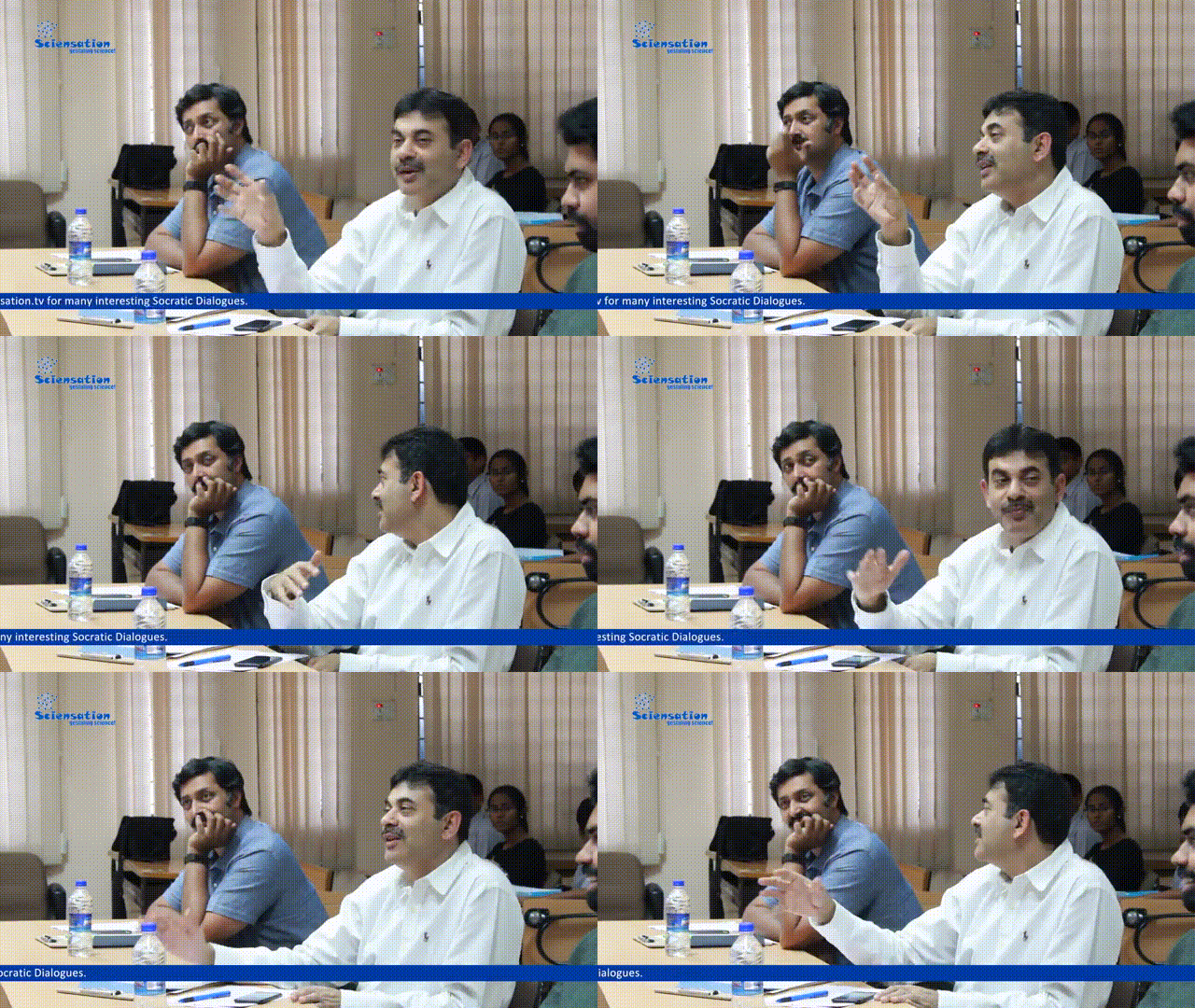
Roundtable
Hack Your MVP
Live session with practitioners and founders.
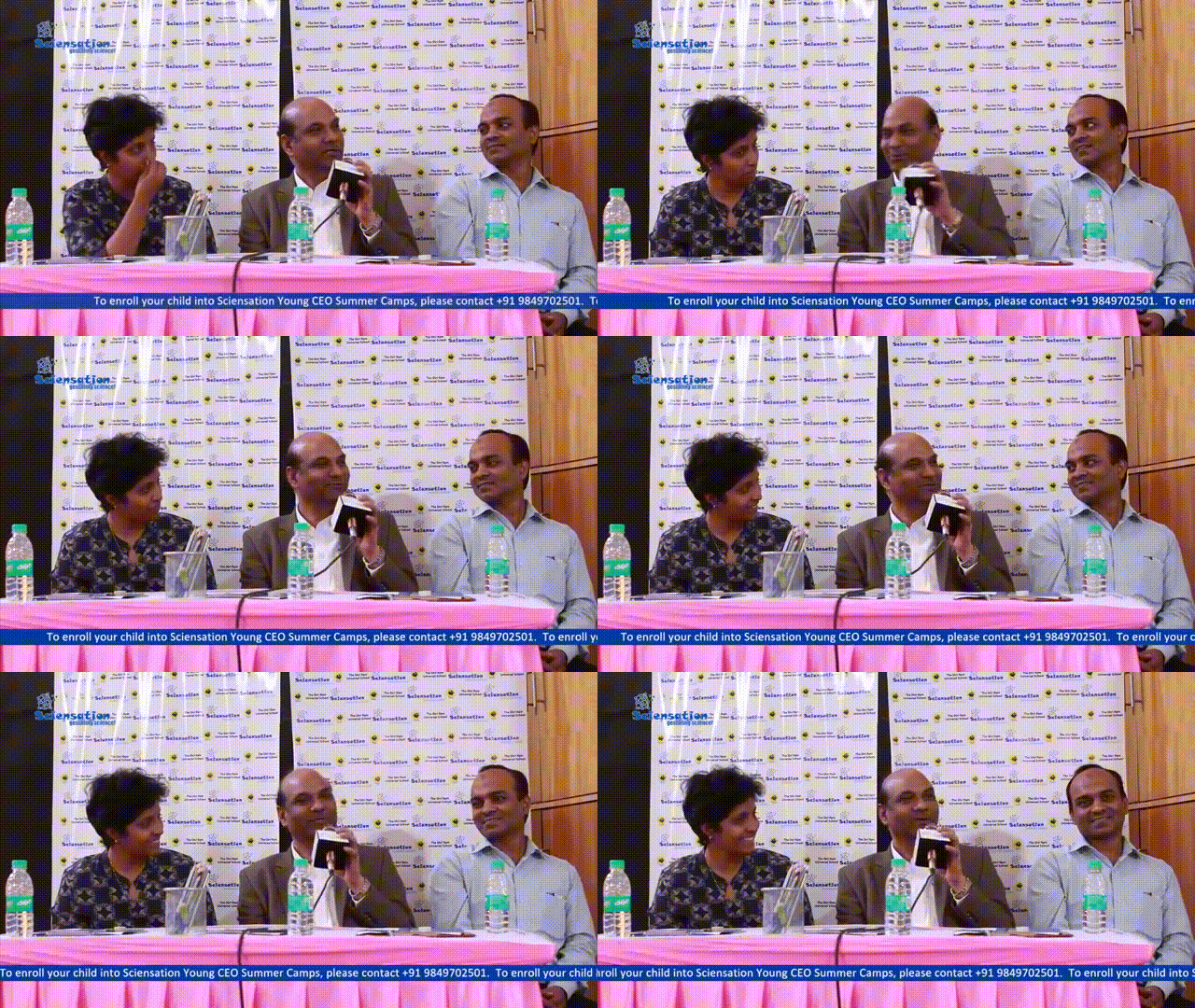
Socratic Dialogue
Darwin Day
Jury-style debate on scientific and business questions.
Case Files
A 3-day purchase to dispatch cycle. Every department did their job, but the handoffs were unowned.
The company mapped the actual flow and redesigned the protocol between departments, setup Microsoft CoPilot AI automations.
“3 days became 1 day, recovering 200+ days of capacity per year”
The Proof
DeepThought helped us in deploying and managing high performance elastic teams. DT runs continuous improvement, which means Project2 is better than Project1 and Project3 is better than Project2
Pharma & Biotech Transformation
Before you start — read this
Your mind map gets a few seconds.
Just like an answer sheet.
Picture an examiner with 300 papers stacked in front of them. Yours gets seconds, not minutes. The marks don’t go to whoever wrote the most. They go to the one answer that is clearly their own. Your hand-drawn mind map is that answer sheet.
You draw it by hand
On paper. No printout.
We glance, like an examiner
Seconds, not minutes.
It earns the marks, or it doesn't
Your thinking, or ChatGPT's.
Here’s the test we actually run
ChatGPT
4 seconds📄 [pasted: this entire assignment page]
Here is your diagram: Problem → build a dashboard → train the team → done.
If that is your diagram too —
where is your thinking?
And ChatGPT will hand you confident, wrong answers. We expect you to argue with it, test the logic, and catch what doesn’t hold. The thinking is the part it cannot do for you.
What ChatGPT gave back
“Problem → build a dashboard →
train the team → done.”
Word for word, what ChatGPT said.
Could be any company, anywhere.
Reads like everyone else’s.
Your own thinking
I asked it back: would a dashboard
actually get used? It wouldn’t —
the last one didn’t.
So I drew what really blocks the work.
Specific to this problem. By hand.
We want to meet you.
Most pages we get are exactly what ChatGPT returns. We can tell in seconds. The few we shortlist did the digging, caught its mistakes, and drew something it never could. Where is the thinking? That is the entire test.
How To Approach This
This is an open-book exam.
Books, internet, ChatGPT — all allowed. Finding an answer is not the test. Everyone can do that now. The test is whose thinking ends up on the answer sheet: yours, or the machine's.
Below is the actual work. Every box is something you hand in. If you can't tick it, you skipped that part — and we will see the gap. Garbage in, garbage out.
A · Research
What you produce
AI rule
Use AI to find and explain sources. It does not count as a source. A fact counts only if you can name its real origin.
B · Reasoning
What you produce
AI rule
Use AI to list options and poke holes. Choosing which is right is yours, in your words. If your B answers match ChatGPT’s first reply, you didn’t reason — you copied.
C · The Artifact
What you hand in
AI rule
None of this is AI-generated. Your hand, your voice, your code, your words.
A real example, from this page
This very section was written with an AI. Here is what the person typed back to it, draft after draft, until it stopped being generic:
The AI never once knew, on its own, that it was being generic. A person had to know — and had to keep rejecting until the work became concrete, the boxes above. That rejecting is the thinking. That is the job.
Why this matters
Paste this page into ChatGPT and submit what it returns, and you cannot produce A1, A2, B2, B5, or C2 — they do not exist unless a person did the work. That is how we read a submission in one minute: we look for the boxes a machine can't fill.
Selection Process
3 parts. One assignment. Everything on this page.
Fork an HRMS. Build a test suite. Ship 5 QA tickets. Everything you need is on this page.
Understand Construction Payroll
Five stakeholders. One payroll pipeline. Every bug is someone's missed wage.
Build, Test, Protect
Fork an HRMS. Understand the team. Build the safety net. Prove quality is a system, not a phase.
Submit Your Work
GitHub repo. Hand-drawn mind map. Honest self-check. Then submit.
This process is rigorous and most applicants are rejected. Proceed only if challenges fuel you.
Your Journey
1 round. 48 hours. Step by step.
The clock starts when you send the consent message on Internshala.
Fork an HRMS. Build a test suite. Ship 5 QA tickets. Everything you need is on this page.
All parts due within 48 hours. Submit on Internshala chat.
Every HRMS — whether it serves 50 workers or 5,000 — runs on the same core pipeline. Workers get onboarded, attendance is tracked, overtime is logged, payslips are generated. Between those steps, five types of people interact with the system differently. If you understand their world, your tests will protect what matters. If you don't, you'll automate the wrong things.
Part 1
FoundationUnderstand Construction Payroll
Before you write a single test, you need to understand what this system actually does. Not 'an HRMS.' From first principles: who depends on it, what breaks when it fails, and why the data flowing through it is someone's livelihood.
Study the stakeholders. Walk the HRMS flow. Answer the three grounding questions. If you can name what breaks when each step fails — and who gets hurt first — every test you write will be grounded.
Ground Yourself
Write what YOU understood, even if it sounds elementary. Elementary and yours beats sophisticated and borrowed.
Every piece of data in this HRMS flows toward one output. What is that output, and why does everything else revolve around it?
This is the single most important question in this assignment. If you get this right, every test you write later will be grounded. If you get it wrong, you'll automate the wrong things.
Who is the most vulnerable person in this system, and what does a system failure mean for them specifically — not in the abstract, but this month?
Not the user with the most features. The person who gets hurt worst when the system fails. What does a payroll error mean for their family this month?
Trace what happens when a site manager enters the wrong overtime hours for a worker. Where does that error travel, who should catch it, and who actually catches it?
Follow the data through the pipeline. How many steps between a fat-finger mistake and a wrong payslip? Where are the checkpoints? Are there any? If nobody catches it, what does that tell you about where your tests need to be?
Part 2
Build, Test, Protect
Fork an HRMS. Understand the team. Build the safety net. Prove quality is a system, not a phase.
Part 3
Submit Your Work
GitHub repo. Hand-drawn mind map. Honest self-check. Then submit.
Commitment
What we ask. What we invest.
This is a full-time commitment. Proceed only if you can dedicate the required time and energy.
Schedule
9:30 AM – 6:30 PM
Monday – Friday
Duration
12 months minimum
Full-time fellowship
Compensation
₹65,000–₹75,000/month
Engineering roles
L&D Investment
₹5,000/month
DT invests in your growth
Location
Whitefield, Bengaluru
Experience: 1–2 years required
Internet
High-speed required
Stable for video calls
Rules of Engagement
AI policy. Per part.
Part 1 & 2: Research & Writing
Use AI tools freely for research, learning, and drafting. Set guardrails against hallucination.
Hand-drawn Diagram
Must be drawn by hand on paper. Not digital, not AI-generated. 30+ nodes: what you learnt, what beliefs changed, what you realized.
All Communication with DT
We want YOUR thinking, not a language model's.
Consent to Proceed
Before starting, you'll reply on Internshala with:
“I understand that:
- The selection process is long, rigorous, and most applicants are not selected.
- I may be rejected even after significant effort.
- I will remain professional in all communication.
- I will not use LLM/AI tools in the chat thread.
- I will complete the assignment within 48 hours.”
FAQs
Common questions. Clear answers.
Open Roles
Pick your path into the DT Fellowship.
Each role has a unique Round 1 assignment. The selection experience (rounds, mentorship, the work) is the same.
The Launchpad
Other jobs give you a title.
This one gives you a seat at the table.
Sravan went from BBA graduate to Chief of Staff. Shagun shipped 58 modules as a fresher. They weren't trained for it. They did the work, alongside founders, on real problems, with real stakes.
“Everyone at some point in life should work at DT.”
Feliza Dadachenji, Maths Asst Professor | DT Fellow, 2020
We don't look for the best candidate.
We look for the most curious one.
Challenges should fuel you, not frustrate you.